
When you travel through Bali during Galungan, you immediately notice that something special is happening.
The streets are decorated with tall bamboo poles, families are dressed beautifully in traditional clothes, temples are full of offerings, and the atmosphere feels warm, spiritual, and deeply connected to Balinese culture.
For many visitors, Galungan is one of the most memorable cultural experiences in Bali. It is not just a ceremony or a public holiday. It is a meaningful period where family, tradition, spirituality, and community come together.
At TripDown Bali, I believe that Bali becomes even more beautiful when you understand the stories behind what you see. Galungan is one of those moments where you get a closer look at the real Bali.
What Is Galungan?
Galungan is one of the most important religious celebrations for Balinese Hindus.
It celebrates the victory of dharma over adharma, which means the victory of good over evil. During this period, Balinese families honour their ancestors, visit temples, prepare offerings, and spend time together with family.
According to Balinese belief, ancestral spirits return to visit their families during Galungan. Because of this, homes, temples, and streets are beautifully decorated to welcome them.
The celebration is based on the Balinese Pawukon calendar, which has a 210-day cycle. That is why Galungan does not fall on the same date every year in the international calendar.
In 2026, Galungan will be celebrated on June 17, followed by Kuningan on June 27. Kuningan marks the end of the Galungan period, when the ancestral spirits are believed to return to heaven.
The Beautiful Penjor: The Symbol of Galungan
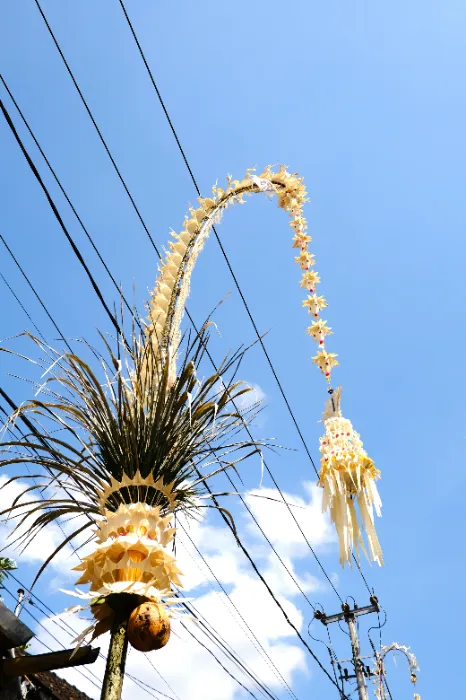
One of the first things you will notice during Galungan is the penjor.
A penjor is a tall, curved bamboo pole decorated with coconut leaves, fruits, flowers, rice, and small offerings. You will see them placed in front of homes, shops, temples, and along roads all over Bali.
For tourists, the penjor makes Bali look even more magical. Streets suddenly become colourful, elegant, and full of meaning.
But a penjor is more than decoration. It is a symbol of gratitude, prosperity, and respect to the gods. It also represents the connection between humans, nature, and the spiritual world.
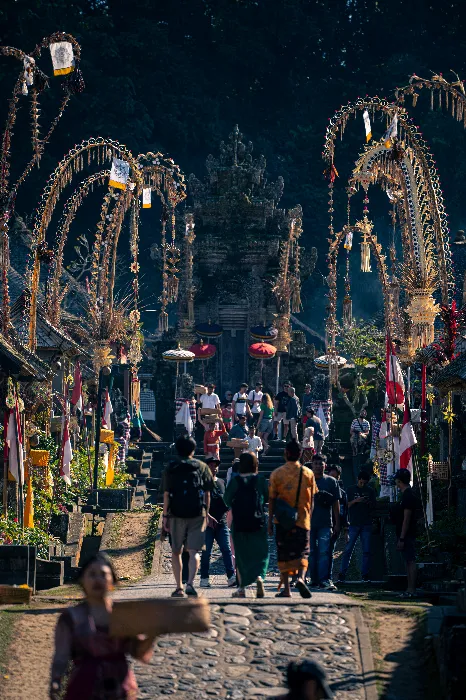
Driving through Bali during Galungan, especially through local villages, is a beautiful experience. The roads are lined with penjor, families are preparing ceremonies, and the whole island feels alive with tradition.
What Happens During Galungan?
Galungan is not only one day. It is part of a longer ceremonial period.
In the days before Galungan, Balinese families are busy preparing food, offerings, and decorations. Many families return to their home villages to pray together and visit relatives.
On Galungan day itself, people usually visit temples and family shrines. They wear traditional Balinese clothing and bring carefully prepared offerings. The atmosphere is respectful, joyful, and very family-focused.
You may also see:
- Families walking to temples in traditional dress
- Streets decorated with penjor
- More ceremonies in villages and temples
- Offerings in front of homes and businesses
- Local traffic around temples and village roads
- Some shops or small businesses closing for family ceremonies
For visitors, it is a wonderful time to see Balinese culture in a very authentic way. But it is also important to remember that Galungan is a religious celebration, not a tourist show.

What Is Kuningan?
Kuningan takes place ten days after Galungan and marks the closing of the celebration period.
On this day, Balinese families make special offerings and prayers. The name Kuningan is often connected with the colour yellow, and yellow rice, called nasi kuning, can be part of the offerings and celebrations.
Kuningan is also a spiritual moment. It is believed that the ancestral spirits return to heaven on this day after visiting their families during Galungan.
For visitors, Kuningan can feel a little quieter than Galungan, but it is still a very meaningful and beautiful day in Bali.
Can Tourists Experience Galungan?
Yes, tourists can experience the atmosphere of Galungan, but always with respect.
You do not need to take part in religious ceremonies unless you are invited by a local family or guide. However, you can still enjoy the beauty of the island during this period.
Good ways to experience Galungan as a visitor:
- Take a drive through traditional villages
- Visit temple areas respectfully from the outside
- Watch the penjor decorations along the roads
- Learn from a local driver or guide about the meaning behind the celebration
- Dress respectfully if you visit a temple area
- Be patient with traffic or changed opening hours
- Never disturb ceremonies for photos
If you want to take photos, always do it politely. Avoid standing too close to people praying, and never walk in front of a ceremony.
A good local driver can help you understand where to go, what you are seeing, and how to behave respectfully.
Is Bali Open During Galungan?
Yes, Bali stays open during Galungan.
Unlike Nyepi, when the whole island becomes silent and almost everything closes, Galungan is different. Hotels, restaurants, tourist attractions, and transport services often continue, although some local businesses may close temporarily because families are attending ceremonies.
It is useful to plan a little extra time for travel, especially when driving through villages or temple areas. Roads can be busier than usual in some places.
If you book a driver, day trip, airport transfer, or activity during Galungan, it is always smart to arrange everything in advance.
Why Galungan Is a Special Time to Visit Bali
Many travellers come to Bali for beaches, waterfalls, rice fields, temples, food, and adventure. But Bali is much more than beautiful places.
Bali has a very strong culture, and Galungan is one of the best times to feel that.
During Galungan, you see the island at its most authentic. Families come together. Villages are decorated. Offerings are everywhere. People take time for prayer, gratitude, and tradition.
It gives you a deeper understanding of why Bali feels different from many other destinations.
This is not just an island with beautiful views. It is an island with a living culture.
Tips for Visiting Bali During Galungan
If you are in Bali during Galungan, these tips can help you enjoy the experience in a respectful and relaxed way.
1. Book transport in advance
Because many local families are busy with ceremonies, it is better to arrange transport early. This is especially important for airport transfers, full-day tours, or trips to more remote areas.
2. Be respectful around temples
Wear respectful clothing near temples and ceremonies. If you enter a temple area, you may need a sarong and sash.
3. Expect some local closures
Some small shops, local warungs, or services may be closed for part of the day. This is normal during important ceremonies.
4. Take your time
Traffic can be slower in some areas because of ceremonies and family visits. Do not plan your day too tightly.
5. Ask questions
Balinese people are often proud of their culture and happy to explain things when asked respectfully. A local guide or driver can make the experience much more meaningful.
Discover the Real Bali With TripDown Bali
Galungan is a beautiful reminder that Bali is not only a destination to visit, but also a culture to respect and understand.
At TripDown Bali, I help you experience Bali in a personal and relaxed way. Whether you need an airport transfer, a private driver, a day trip, or local tips during your stay, I am happy to help you discover more than only the standard tourist places.
During special periods like Galungan, travelling with someone local can make your Bali experience even more interesting. You will understand what you see, where to go, and how to enjoy the island respectfully.
If you are visiting Bali during Galungan or Kuningan, feel free to contact me on WhatsApp. I will help you plan your transport or day trip, so you can enjoy Bali safely, comfortably, and with a better understanding of the island.